

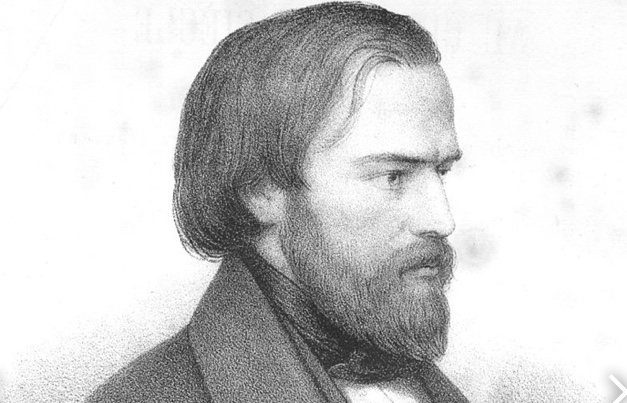
By Caroline Liberatore (Rated G)
Born in 1813, Blessed Frédéric Ozanam grew up in Lyon, France. As a teenager, Ozanam demonstrated an affinity for writing in a variety of forms on numerous subjects. Around the same time, he also experienced a period of spiritual doubt, in which he found himself questioning much of what he had been taught. Ultimately, he resolved these uncertainties before beginning his studies at university – however, this experience of spiritual inquisition was indicative of his contemplative and academic mind.
During his studies at Sorbonne’s School of Law in Paris, Ozanam found himself facing many external challenges to the Catholic tradition. Ozanam utilized his writing capabilities in order to fervently defend his beliefs, remaining steadfast as a voice of truth in the midst of questioning.
As with much of the nature of higher education, Ozanam’s time at university was saturated with intellectual thought and conversation with no resulting action. Eventually, this stance was challenged as Ozanam and other students were convicted by the destitute sight of the poor populating Paris. These observations prompted them to contemplate if the true substance was in mere thought or word.
This realization spurred these students towards serving the impoverished around them, namely in the establishment of the Conference of Charity, later called the Society of Saint Vincent de Paul, after Ozanam’s role model. Although Ozanam continued to pursue academics, eventually receiving a Doctorate of Law, he maintained balance between his scholarly life, his family life (for he married and became the father of a daughter), and his ministry to other people. Unfortunately, this remarkable and ordinary life of service was short-lived, as Ozanam died from Bright’s disease at 40 years old. His life, however short, was nothing less than a potent affirmation of the gospel.
May we, as Frédéric Ozanam, not see ourselves as above anything more than ordinary lives and service to Christ. Let our lives be quiet and remarkable, as he allowed his to be.
Sources:
 LogoSophia Magazine