
By Ian Wilson (Rated G)
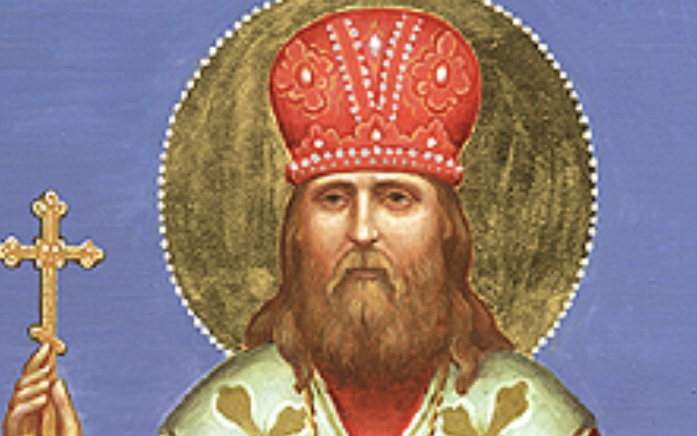
A brilliant theologian and defender of the Russian Orthodox church, Archbishop Hilarion was born Vladimir Alexievich Troitsky around the year 1885 in the Russian village of Lipitsa. He was born into a family of clergy and theologians, and followed in his father’s footsteps.
Vladimir’s thirst for knowledge was unquenchable, at one point leading him to run away from home as a little boy seeking education. He eventually did go to seminary, and graduated from the Moscow Theological Academy in 1910. Vladimir yearned for more of the presence of God, eventually taking monastic orders in 1913, changing his name to Hilarion.
Hilarion threw himself, body and soul into the ministry. He quickly rose through the ranks to become archimandrite (head of a monastery) and then inspector of the theological academy. By the end of 1913, he was confirmed a professor of Holy Scripture.
Hilarion wrote many books, sermons and theological treatises, including the five-hundred-page-long Outline of the History of the Church’s Dogma, and many other works. He was indeed a great scholar of theology. He was described as tall, broad-shouldered, strong, handsome, and red-headed. He was known for being vigorous, charismatic in preaching, with an excellent singing voice (most of the Russian liturgy is sung).
In 1918, Hilarion argued fervently for the restoration of the Moscow Patriarchate, which had been dissolved for over a century. He was an ardent supporter of St. Tikhon, whom the church had elevated to the office of patriarch.
The following year was an unfortunate one for Russia. The Bolsheviks had ravaged the nation, destroying the monarchy and instituting an aggressive version of Marxist ideology. The Russian Church was their next target. St. Hilarion was arrested in 1919 and imprisoned for three months.
After his release, Hilarion was appointed bishop of Verey on May 20, 1920, which he only served two years before being arrested again. He was exiled to Archangelsk, where he lived for a year. Upon his return, he was honored with the rank of Archbishop, in which position he served admirably. He called for a reform of Orthodox life, based on the laws of the Church. This order was necessary in such chaotic times. He debated vigorously against the Soviet renovationists in the church, and proved a formidable opponent.
His reform mindset made Hilarion a threat to the Soviet regime. He was arrested yet again, and imprisoned. This did nothing to dim Hilarion’s lively spirit, however. He proved cheerful even under persecution, and was popular among both the inmates and guards for his positive attitude.
Eventually, the Soviets grew tired of Hilarion’s unbreakable spirit, and exiled him yet again, this time to Alma-Atu in central Asia. On the trip, Hilarion was robbed and suffered greatly from the difficulties of the journey. He never arrived at his destination. At the age of only 44, Hilarion died in Petrograd prison on December 15, 1929. The once vigorous monk was a shadow of his former self, unrecognizable to his own family, but not to his Lord.
His title was elevated to saint in 1999, though as one who died for his faith, he is more commonly called hieromartyr. He is celebrated on December 15th.
Let us all follow the example of St. Hilarion, being joyful in suffering and uncompromising in our values.
Image from oca.org/saints/lives/2021/12/15/103704-hieromartyr-hilarion-archbishop-of-verey
 LogoSophia Magazine