

By Amanda Pizzolatto
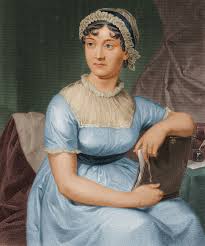
Throughout this year, 2025, celebrations were thrown in honor of the 250th anniversary of Jane Austen’s birth. Her books have been read and been beloved by many since their publication, C. S. Lewis notably among them. Even her best known critic, Samuel Clemens/Mark Twain, stated that she was brilliant. He didn’t understand the English wit and humor she is known for, nor did it seem like romantic comedy was his thing, but despite all his complaints about her work, he still admitted she was a great writer. Now the biggest arguments seem to be which adaptation of her most beloved novels is best, and the biggest lament is that there is not more adaptations of her other works. Though, one can only do so many, as she had only written six books to completion in total. There were a couple of short stories and an incomplete novel that was turned into a series, which was also incomplete. But even with all of that, her popularity only seems to grow. There is work on another Pride and Prejudice adaptation in the works from Netflix, plus several other projects based on fanfiction that have been published over the years. Will it do as well as her stories? Based on previous fanfiction that had come out previously, most tend to fade into the shadows of her greatness. None still seem to be able to stand on even the same level as Austen, at least when it comes to her genre. If one includes all of English literature, one can easily see Shakespeare, Dickens, and, dare I say, Tolkien and Lewis standing there at the top with her. But in terms of romantic comedy, even Regency historical fiction, one could say Georgette Heyer comes the closest, but even she, and the one who was nicknamed the Queen of Romance at one point in time, Barbara Cartland, now seem almost completely forgotten. This then begs the question, what makes Austen so great, so timeless?
One of the points to her greatness is one I suspect many overlook, that is of her wit and sarcasm. Elizabeth Bennet is considered the golden heroine because of it, despite not many fanfictions after that really making use of it. Or if they do, it’s not done in the same way. I think it’s more like some of Mel Brooks movies, pointing out the ridiculousness of some things by exaggerating it just a bit, or merely showing it straight up and letting us laugh at how ridiculous it is. Maybe that’s the difference, too, Austen pulled from experience. Have you ever read one of her novels and you sat there laughing, thinking to yourself, “I know someone like that”? Now turn to the fanfictions, if you’ve read or watched them. Do you have the same thought, that a character, or even more than one, reminds you of someone you know? Perhaps that is just one major ingredient missing from Austen wannabes, the humanity and relatability of her characters, to recognize them as people, maybe even as people you know or have met. Then you get met with Austen’s witty remarks, or backhanded insults politely hidden beneath snark, and it tickles your brain. The only time I think she shows someone truly mean is in Emma as we get to see Emma’s thoughts about certain people. Granted, the point is to make jest at Emma’s naivety and blindsideness concerning social cues and, well, just reading the people around her. Not to mention her air of pretended perfection that gets torn apart the first instance something doesn’t quite go the way she had wanted. But the point of the story is that she isn’t supposed to stay that way and learns and grows into a very well rounded young lady. But one can argue it is a tongue-in-cheek attack of those young ladies who attempt to play matchmakers without understanding that there are differences between people. Jane Bennet brings this up, in fact, to Elizabeth where it concerns Charlotte marrying Mr. Collins. That in matchmaking, one must take into account both parties and not attempt to look upon either as someone else.
Perhaps therein lies the real distinction between Austen and others who try to follow her, aspects of truth. She was writing about the society she was living in, others who come after are writing about what has already long gone and/or looking at it solely through a modern lens. Not that either is wrong to do, it just doesn’t carry the same charm that Austen had as she wrote about the times she was living in, mainly the social norms and trends of the time. For instance, her novel Northanger Abbey was satirizing the Gothic genre, a popular genre of novels at the time she wrote it. She was by no means a hater of the genre, she had apparently mentioned enjoying the works of Anne Radcliffe, one of the primary authors she references in her book. But it’s no different than some comedian creators poking fun at plot holes in slasher flicks, or like how the Scream franchise does it.
In short, it really is all of it at once. Taking it apart and focusing only on one aspect of her works does no one any good, her least of all. One can’t bake a loaf of bread or a cake without having the correct amount of the right ingredients. It is no different with a novel. Timing, too, is important as well. And this is quite possibly among the many reasons why Jane Austen’s popularity has been constant and ever growing, the timing, the period, the style, the characters, the genres, the romance, all of it, together, has made Jane Austen one of the most popular women writers of all time.
 LogoSophia Magazine