
By Sarah Losardo (Rated G)
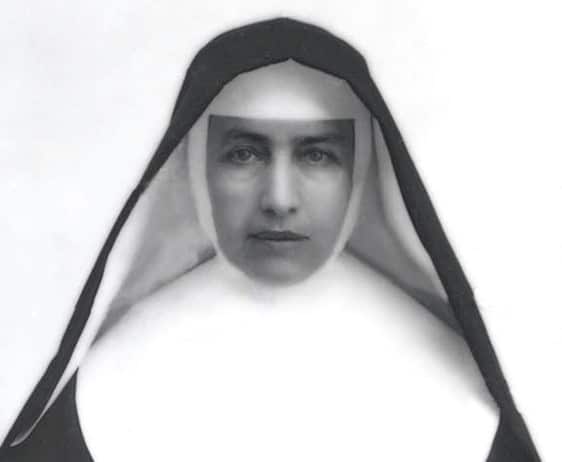
Mother Marianne Cope was born Barbara Koob on January 23, 1838, in West Germany. Her parents, Peter and Barbara, soon moved their large family to the United States, where they became citizens and their last name was Anglicized. Young Barbara grew up in Utica, New York, where she and her family attended St. John’s Catholic Parish. As a teenager, she worked in a factory to help support her younger siblings, but she dreamed of becoming a religious sister, finally realizing that dream at the age of twenty-four when she joined the Sisters of St. Francis in Syracuse, N.Y. and took the name Sister Marianne.
Sr. Marianne taught for a number of years, then became principal, then served in various other administrative positions, including the governing board of the Sisters of St. Francis in her area. In this role she helped establish two hospitals in the second half of the 1860s – St. Elizabeth Hospital in her hometown of Utica and St. Joseph’s Hospital in her longtime home of Syracuse. In addition to being among the first fifty general hospitals in the country, both institutions were unusual for their time because they admitted all patients without discrimination. Sr. Marianne also insisted on a much higher standard of cleanliness than was expected at the time. She partnered with the new Syracuse University, allowing their students to learn in her hospitals, but only if the patient agreed – another unusual rule for the era. Sr. Marriane gained the title of Mother when she became the Mother Provincial of her order.
In 1883, Mother Marianne received a letter from the Sandwich Islands – now known as Hawaii – begging for someone to take charge of their hospitals and schools. Along with six other sisters, Mother Marianne set out halfway around the world, primarily to care for those with leprosy (now called Hansen’s Disease). In Hawaii, Mother Marianne established Malulani Hospital on Maui, fixed administrative problems at Branch Hospital in Oahu, and opened Kapiolani Home for the children of patients with Hansen’s disease. It was Mother Marianne and her sisters who cared for the more famous Fr. Damien of Molokai when he contracted the dreaded disease, and she took over much of his work when he died, until the Brothers of the Congregation of the Sacred Hearts of Jesus and Mary arrived to take over by her invitation. Mother Marianne was given the medal of the Royal Order of Kapiolani by Hawaii’s King Kalakaua in recognition of her incredible service to the country. She died of natural causes in Hawaii on August 9, 1918, and her sisters set in motion the process of canonization that would be concluded on October 21, 2012, when Pope Benedict XVI officially declared her a saint.
May we, like Sr. Marianne, walk boldly through our vocational duties, set high standards, lead by example, and trust God no matter what comes.
Sources:
- hmycatholic.life/saints/saints-of-the-liturgical-year/january-23-saint-marianne-cope-virgin-usa-optional-memorial/
- catholichawaii.org/catholic-essentials/saints-traveling-relics/history-of-hawaiis-saints/saint-marianne/v
 LogoSophia Magazine