

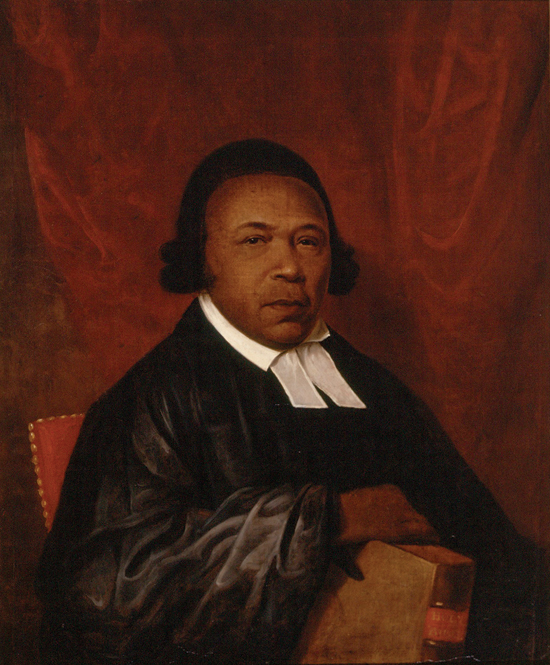
By Ian Wilson
Looking back at the history of Christianity in America, one name that doesn’t come up often is Absolam Jones– but it should. As the first pastor and founding member of the African Methodist Episcopal Church, Reverend Jones held an important position in the history of the Church in America.
Born as a slave in Delaware in the year 1746, Absalom Jones had a passion for learning, and especially the Word of God from his youth. Recognising his sharp intellect, his master, Abraham Wynkoop, had Absalom taken from the fields and trained as a house servant. This allowed Absalom more time to learn. Eventually, through hard work and thrift, Absalom saved up enough pennies to be able to afford books– among them a Bible, a spelling book and primer. He would beg anyone willing to teach him to read. He took little time for idle amusements, instead applying himself to learning. “By this course I became singular, and escaped many evils, and also saved my money.” This self-discipline would serve him well when he became a minister.
In 1753, Abraham Wynkoop died, and his son, Benjamin, inherited the estate, including Absalom. When Absalom was just sixteen, Wynkoop sold the plantation, Absalom’s mother and his siblings, and moved to Philadelphia, where he opened a grocery store. Absalom continued to work for Wynkoop at the store, moving goods in and out, while also attending a night school for black Americans.
Wynkoop and Jones attended St. Peter’s Episcopal church in Philadelphia, where Jones met Mary Thomas, another slave. The two were wed in 1770 at St. Peter’s. Using his own savings, loans from friends and abolitionists, and help from his father-in-law, Jones managed to buy his wife’s freedom. However, he could not buy his own. Despite saving up enough money, Jones could not convince Wynkoop to free him. Wynkoop later relented, granting him manumission in 1784. Jones continued to work for Wynkoop as a paid employee for some time afterward, however.
Jones had a great burden for the soul of the black community, and he spent no little time in evangelizing and ministering to the needs of his fellows. When he began worshipping at St. George’s Methodist-Episcopal Church, he met Rishard Allen, who shared Jones’ concerns for the community. In 1787, they began the Free African Society, the first ever mutual aid organization by and for the black community. The leadership at St. George’s clearly saw the talent and burden of the two men, and had Jones and Allen promoted to lay ministers to the black membership. The membership at St. George’s increased dramatically due to the men’s efforts at evangelization, so much so that they had to build a gallery in the sanctuary to fit everyone in. This was all paid for by the hard work of the black membership.
However, this did not last. A dispute arose in the congregation regarding where the black members were allowed to sit. The leadership at St. George’s determined to segregate the congregation, leading to a confrontation in 1794, in which Jones was physically accosted. The black membership, indignant with the unfair treatment, walked out.
Prior to this, the Free African Society had been holding religious services, but the idea of forming a church specifically for the black community in Philadelphia gained traction, and formed the first African Church of Philadelphia. After taking a vote, the congregation decided to affiliate with the Episcopal Church, under three conditions: that they be received as an organized body; that they have control over their own local affairs; that Absalom Jones be licensed as layreader and then, if qualified, a minister. After much prayer, Absalom Jones decided to accept the call to minister. On July 17, 1794, the African Episcopal Church of St. Thomas was dedicated. In its first year, its membership swelled to 500 members. Jones was ordained a deacon in 1795, and then a priest in 1802.
Jones was well known as a man of strong faith and gentle manners, who preached a gospel of repentance, calling on the slave owners to cleanse themselves of the wicked practice. He believed that God would one day judge on behalf of the oppressed, and the oppressors must make themselves right with God.
In 1818, Reverend Absalom Jones went to see Father of all men face to face. May we always act with conviction as he did.
 LogoSophia Magazine