



A Defense Of Fiction
By Ian Wilson
I recently had an interaction (one of many) with a friend from church that left me, frankly, a bit angry. The discussion started around the works of C.S. Lewis, and this gentleman basically rendered the opinion that his fiction was “silly”. This is not the first time he has uttered this opinion, and I was getting rather tired of the sentiment.
I replied to him that “truth in narrative can slip in under the door when truth in facts is still waiting outside.” He was silent after that. I don’t think he was prepared for me to have an actual defense ready. Frankly, I was a bit shocked at it myself.
In all seriousness, where did this idea come from? That somehow reading nonfiction is morally superior to reading fiction? Our ancestors certainly didn’t think this. Civilization is built on great myths and novels. We were talking of C.S. Lewis, of all people! Praising his brilliance. Yet one of his central beliefs was the idea that reading and writing fiction had value.
Why read fiction?
Fiction as Extrospection
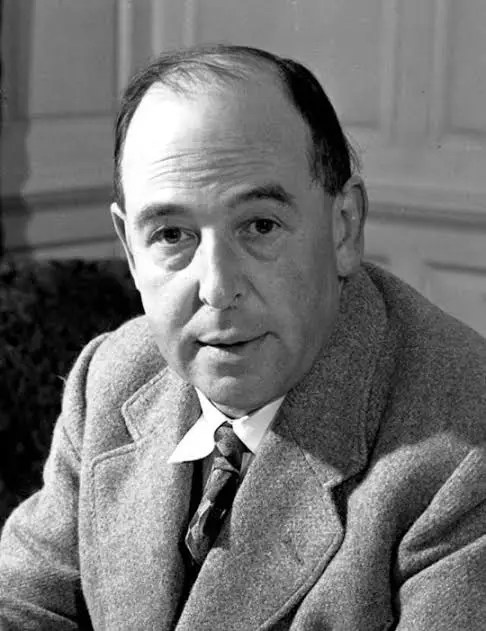
It is a valid question. Why should anyone read fiction? The reasons are manifold, really. We shall turn first to the writings of the man himself, C.S. Lewis. In his essay, An Experiment in Criticism, Lewis outlines how fiction allows us to see the world through other eyes than our own, or see how the world might be different. I’ve written about this myself from time to time, not knowing I was thinking Lewis’ thoughts.
“The man who is contented to be only himself, and therefore less a self, is in prison. My own eyes are not enough for me, I will see through those of others. Reality, even seen through the eyes of many, is not enough. I will see what others have invented.”
—C.S. Lewis
You need to look outside yourself. Reading fiction gives you the unique opportunity to see the world through the eyes of the characters. It lets you see the world differently, and builds greater sympathy between people. Reading a great novel will expand your mind and your heart. It will expand your inner life, make you more than what you were.
Fiction as Allegory
Another reason to read fiction is because good fiction can be a vehicle for truth. As I said above, truth in narrative can slip in under the door while truth in facts is still waiting outside. In fact, because of how our minds work, I would say it is easier to communicate truth through stories than through bare facts. I can tell you all about the battle of Agincourt— Henry V’s miraculous victory against the French, where it happened, why it happened, when, how many troops King Henry brought with him vs. the French, etc.— but you won’t understand the real meaning of the event. Shakespeare could do that better through his play, Henry V.
I could preach to you about courage, loyalty, and self-sacrifice, but it would be easier for me to read you A Princess of Mars by Edgar Rice Burroughs. I could talk to you of love, and not judging by appearances alone, but it would mean more to you if you read Beauty and the Beast.
Every culture has fiction and fairy tales; stories that they tell to explain the world. It’s how our ancestors conveyed what they valued most. This is why great works of literature survive, while others vanish into dust. There are layers to these stories that reveal universal truths about the human condition.
Truth in Narrative
Fiction, you see, is not entirely “fake”. It deals with truth through a narrative format. It is the most effective, most subversive form of propaganda. It forms us in ways not even we fully comprehend. G.K. Chesterton said it better than I could:
“Every great literature has always been allegorical – allegorical of some view of the whole universe. The ‘Iliad’ is only great because all life is a battle, the ‘Odyssey’ because all life is a journey, the Book of Job because all life is a riddle.”
—Gilbert K. Chesterton
Indeed, Christ Himself understood this. That’s why He always preached in parables. Yes, He would say things directly, but He preferred this format, because ultimately, stories are part of the human spirit. To deny their power, or worse, to belittle it, is frankly foolhardy. He who controls stories controls the culture and the nation. This fact alone should be enough to give one pause before one speaks of “silly fiction”.
By no means is fiction “useless”. Quite the contrary, there may be nothing more useful in the world.
 LogoSophia Magazine