

By Lyn Wilson
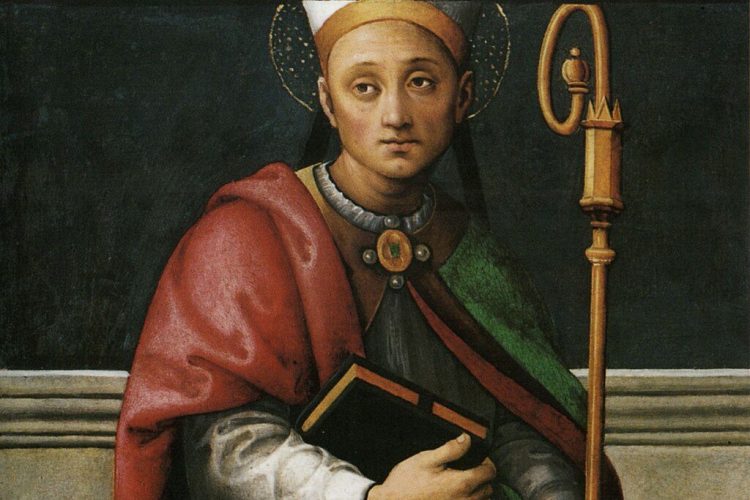
St. Herculanus, whose feast days are both November 7 and March 1, is patron saint of Perugia, Italy. His life story is a fact decorated by a bit of fantasy. He was said to have been sent to Perugia from Syria to evangelize sometime in the earlier half of the 6th century.
According to Key to Umbria, a website with a much more complete accounting of Bishop Herculanus’ life, Herculanus was sent to Perugia at a very turbulent time in history. According to this account, the Ostrogoth king Totila began a long, four year siege of Perugia during which Herculanus became Bishop of the city.
When Totila finally sacked Perugia, Bishop Herculanus was the only representative of the people left in the city. When Totila was asked about what to do with this man of God, the answer was brutal: beheading and torture. A soldier beheaded Herculanus as an act of mercy before the torture prescribed had been completed. The details of his torture are too gruesome to be repeated here.
Forty days after the city was sacked, people were allowed to return to a city in shambles. The body of Bishop Herculanus, having been hastily buried, was found by some noble citizens whole and uncorrupted. His body was reburied in the Church of Peter the Apostle in Perugia, Italy.
May we always be ready to take up our required tasks despite hardship, as did Herculanus.
 LogoSophia Magazine