“Follow the science” is itself an unscientific expression, personifying science as a sort of cosmic Boy Scout troop leader or perhaps a soldier taking the point. It suggests that we should not follow our hearts (which is just as illogical), our music, our dreams, or anything else except science personified almost as a deity.
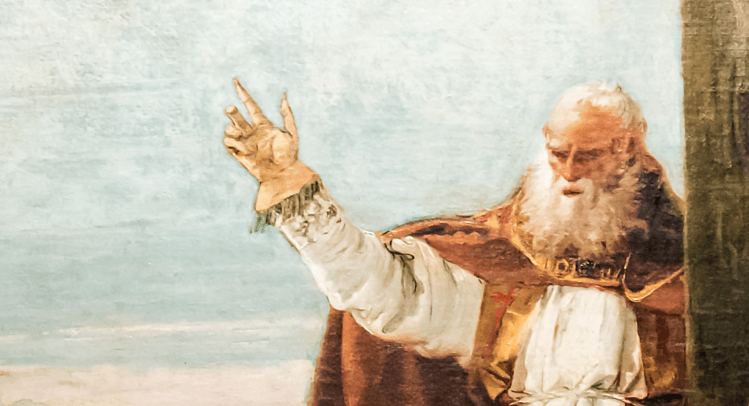
St. Macarius of Jerusalem was the bishop of that city during the time of the First Council of Nicea in 325. Nothing is known of his early life, but he was elevated to the rank of bishop in 312. Macarius was a strong opponent of the heretic Arius…
The panther-like litheness of my youth (cough) long ago expanded into the, oh, prosperous look of Chaucer’s merchant, and so I have gotten into the excellent but Calvinistic habit of, well, treading along a treadmill every day.
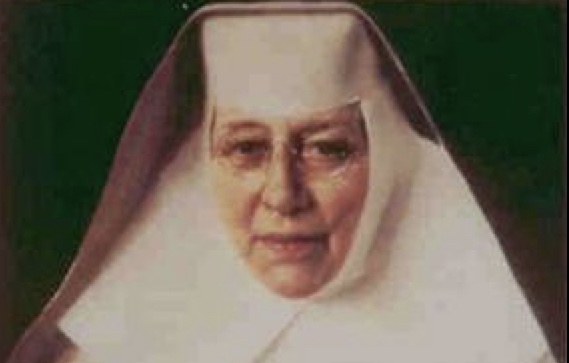
On a trip into the West, Katherine witnessed the misery of the Native American tribes and resolved that this population and the African American population would be her own personal mission. She became a patroness of schools and missions to these marginalized groups.
Have you ever had the feeling that you needed to watch yourself in a special way because you were representing something? The moment we take the name “Christian,” we are proclaiming ourselves Christ’s representatives.
Following a long-held desire to serve the poor, at age 45, Mother Ascensión and four of her sisters accepted a mission to Peru, where they trekked through jungle and mountains to Porto Maldonado, the first European women to make the journey.
Janani Luwum was born in Uganda in 1923. He grew up to be a school teacher, then converted to Christianity in 1948. The following year he attended a seminary school, then returned to his home in Acoli to teach others about his faith.
Not much is known about the early life of Scholastica, twin sister of St. Benedict. St. Gregory the Great, in his biography of St. Benedict, states that she was dedicated to Jesus at a young age.
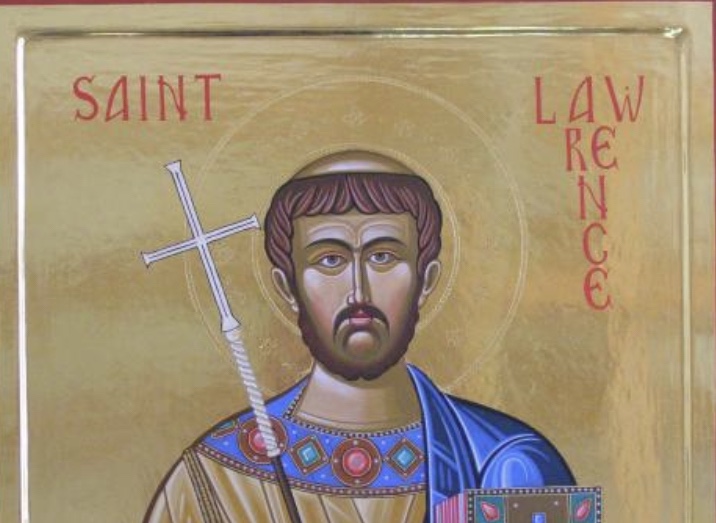
Lawrence of Canterbury was one of the early missionaries sent to Britain from Rome along with St. Augustine of Canterbury. After Augustine’s death around 604, Lawrence succeeded him as Archbishop of Canterbury.
One of the satellite channels programmed a weekend of Audie Murphy cowboy movies. In my youth these were a Saturday afternoon staple down at the Palace Theatre, of happy memory, and I was pleased to revisit Destry (1954).
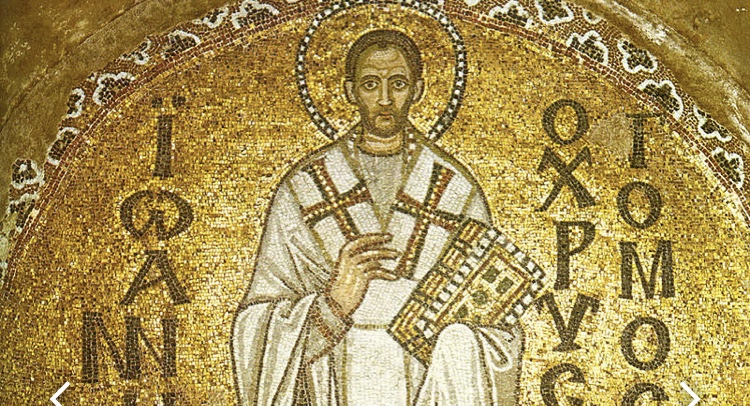
Saint John Chrysostom is a figure in ecclesial history with a stunning breadth of influence. As a writer, preacher, and archbishop, his life was scored with a generative fervor in bolstering and guiding the church.
…tyrants don’t want people thinking for themselves. Books are dangerous to bullies, whether they are Hitler, Stalin, Ho Chi Minh, Vlad the Bad Putin, Chairman Xi, or the Ms. Grundy down the street.
When you say “Gothic” nowadays, most people tend to think of a style of literature, or music, or aesthetic, or more rarely, architecture. These things, however, have little to do with the historical Goths.
Historians often separate Goths in two subgroups: Visigoths (western Goths) and Ostrogoths (Eastern Goths) but this is only for convenience’s sake. The Goths themselves recognized no such distinction, nor did the Romans at the time.
Little is known about Pope Fabian, including when he was born. He became Pope in 236AD, following the death of Pope Anterus. The early Church historian Eusebius relates that Fabian was not one of the original candidates for the office, but a dove descended upon him during the election process and those present decided this was a sign from the Holy Spirit and thus duly elected him.
“Finally, brothers, whatever is true, whatever is honorable, whatever is just, whatever is pure, whatever is lovely, whatever is commendable, if there is any excellence, if there is anything worthy of praise, think about these things.” While this command does imply that we should not think about that which is opposite to the characteristics listed here, Paul gave this command in this way for a reason.
To Jordanes, the struggle against the Huns was a holy war against the demoniac forces of chaos. The Huns weren’t just savage, they were inhuman. The Huns, like many Asian steppe people, were adept on mounted warfare and deadly with the re-curve bow. They wore armor of leather treated with animal fat to make it more flexible and rain resistant. Their helmets were also of leather, but lined with steel and mail to protect their heads and necks. In close combat, they were skilled with the blade. They were renowned for their cruelty and cunning by all those who had this misfortune of encountering them.
St. Mungo was born Kentigern, son of Princess Teneu of Lothian. He was the result of his mother being attacked by Owain mab Urien, for which her father, King Lot (also called Lleuddun) had Teneu thrown from a cliff. She miraculously survived and came to an area inhabited by a man called Saint Serf, and was cared for by him.
For those who do not know, the Goths and the Huns were two tribes living on the outskirts of the Roman Empire. The clash of these three cultures contributed greatly to the fall of Rome, and affected modern society in a few important ways. By the 4th century, the Roman Empire had grown so large that it had divided itself into two regions: the West and the East. Each had their own Emperor, and had developed their own subcultures though on paper they were still one empire.
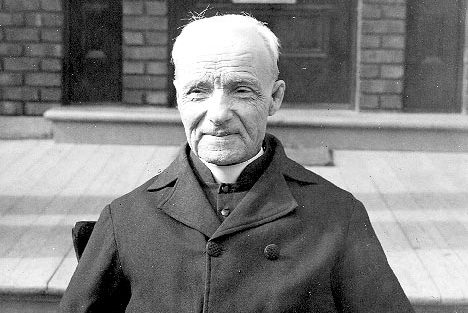
Through trials, rigors and the initial skepticism of the brethren, Alfred persevered, joining the religious order known as the Congregation of the Holy Cross. As a novice, he learned to read (a skill he had not learned as a child) and memorized many portions of Scripture and of the writings of the saints. He received Holy Orders on August 22, 1872, taking the name Brother Andre. He was then assigned to serve as a porter at the College of Notre Dame, which he served admirably, despite ill-treatment by his superior. Once again, he persevered without the slightest complaint as he always had before.












 LogoSophia Magazine