By Brendan the Writer … The Church is headed towards three crises, I think. And when I say Church I mean ‘every Christian denomination’. Likely every group outside Christianity too is going to undergo these three cataclysmic problems in the next decade.
Samson Occom, born in the early 18th century to the Mohegan tribe of Connecticut, is known for his influence on Native American populations during the period of the Great Awakening. As a Native American himself, Occom was introduced to the gospel by Eleazer Wheelock’s ministry centralized around a reach towards Native Americans.
By Cordelia Fitzgerald …we, as a human race, are curious. We are also, for the most part, control freaks. We are usually looking for assurance about the things we expect from life, and thus we have receipts, signatures, IOU’s, and contracts.
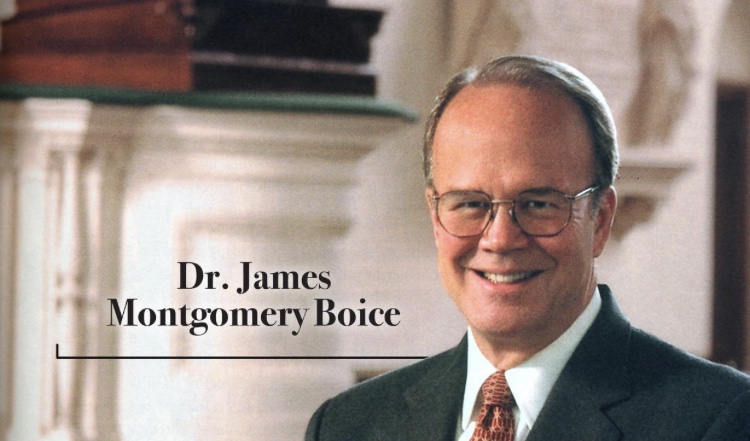
In 1668, Boice became the minister of Tenth Presbyterian Church in Philadelphia, PA, where he would stay for the rest of his 61 years. During that time, he tripled his congregation, wrote a multitude of books and commentaries, started multiple schools and charitable organizations, taught and evangelized through the radio program The Bible Study Hour…
By Ian Wilson (Rated G) Little is known of the life of Irenaeus, one of the great theologians of the Early Church. It is believed that he was born in Smyrna in Asia Minor (modern Turkey) around the early part the second century, AD. There, he heard Polycarp, another early church father, preach. Irenaeus served […]
By Cordelia Fitzgerald … If there’s one thing that the human race, as a rule, doesn’t excel at, it’s communication. Our struggle with this basic need is so great that, even when God, in His perfection, gets involved, we still find some way of muffing it.
By Cordelia Fitzgerald … Music, as many people much more educated than I can expound upon, has profound effects on the emotions, making it the perfect accessory, or even main conduit of information, in film. This role of music as communicator is not limited to musicals, but is rather spread throughout every genre, to their great benefit.
St. Ephraem (also known as Ephrem or Ephraim or Ephraem the Syrian) was born around 306 A.D. in Nisibis, Mesopotamia (modern Turkey). He converted to Christianity as a young man thanks to the teaching of St. James, Bishop of Nisibis.
By Lawrence “Mack in Texas” Hall … Once upon a time people regarded public and school libraries as repositories of thousands of years of civilization, open to all, with John Milton shelved uneasily close to Geoffrey Chaucer and with Phyllis Wheatley a few aisles away from Margaret Mitchell. An old saying is that if a library doesn’t contain books with which you vehemently disagree, it’s not a good library.
By Cordelia Fitzgerald … our good Lord understands of this need of ours for that commiseration, in a way, perhaps, that our fellow men fail to. This God that made us and understands us both from a mechanic or inventor’s point of view and from our very experience, since He too was one of us.
By T.K. Wilson (Rated G) Irene, Great-Martyr of Thessalonica, was born Princess Penelope to pagan parents. Afraid his daughter would be influenced by Christianity (as no doubt the stories of other high-born ladies who dedicated themselves to Jesus had reached him), he locked her up in a tower with thirteen other girls. Because God finds […]
By Michael Colon … To see and activate God’s glory from the black void of our soul, we must believe and practice attributes that comprise the Christian faith. With the help of the Holy Spirit, we can re-stitch our hearts and flick the switch in our souls where the light never dies. Here are some ways we can shine from now until eternity.
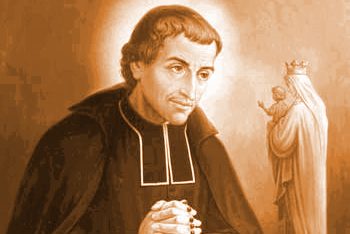
St. Louis Grignion de Montfort was known for his deep devotion and sensitivity towards Christ and the Church from even the days of his childhood. As he matured, he directed this passion towards the study of theology, which he undertook in Paris. It was here, at the seminary of Saint-Sulpice, that Montfort uncovered a particular interest in the Virgin Mary – which would prove to be one of the most defining facets of his life and ministry.
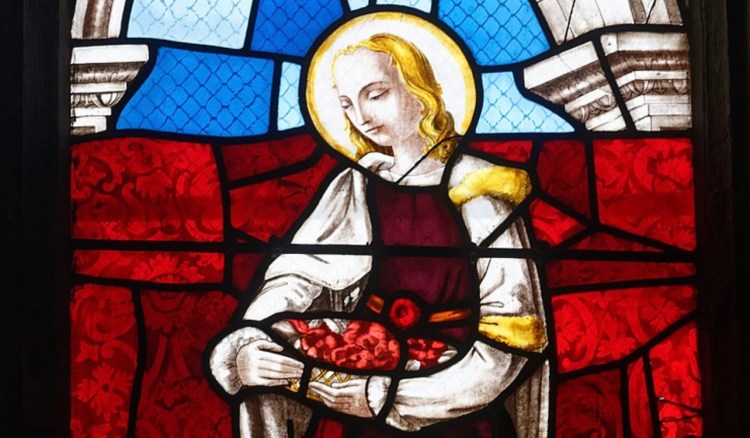
By Amanda Pizzolatto … Elizabeth filled her basket with whatever bread she could find. She just hoped she wouldn’t be seen by members of the court. While her husband shared her desire and passion for helping the poor, she knew his family complained constantly about her works of mercy.
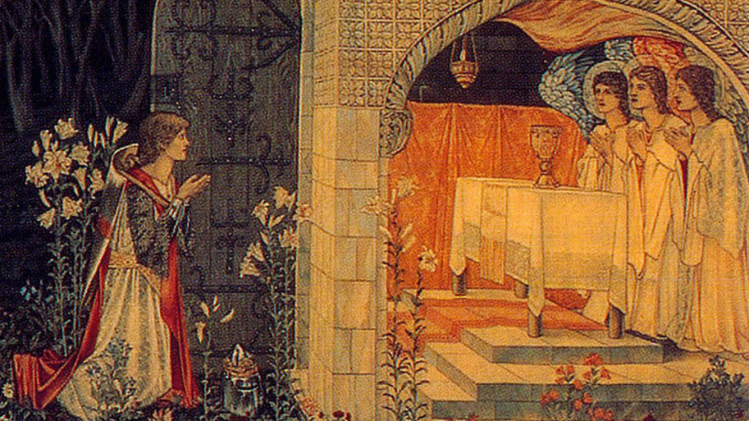
By Ruth Anne Amsden
… But I will argue that Malory drew upon a third source of inspiration for his Arthurian legend, and that is the book of the Acts of the Apostles, attributed to Luke, the beloved physician. By drawing upon Biblical writings for inspiration as well as legend, Malory created a work of Biblical fan fiction.
Pope Martin the First was born in Tuscany, in the late sixth or early seventh century AD. Known for his devotion and piety, he was made an official assistant to Pope Theodore the First. Though Martin was a good and faithful man, it was in this position that his troubles began.
Cyrene is a region in the Roman province of Libya in North Africa, which has led to some speculation that Simon of Cyrene was black. The fact is, we do not know the color of his skin. We do know that Cyrene had a large population of the Jewish diaspora. Simon, like many Jews, had likely come to Jerusalem to celebrate the passover.
Not much is known about the early life of Aedh Mac Cairthinn of Clogher. It is supposed by some that he was a prince of one of the kingdoms of Connaught or may have been the uncle of St. Bridget.
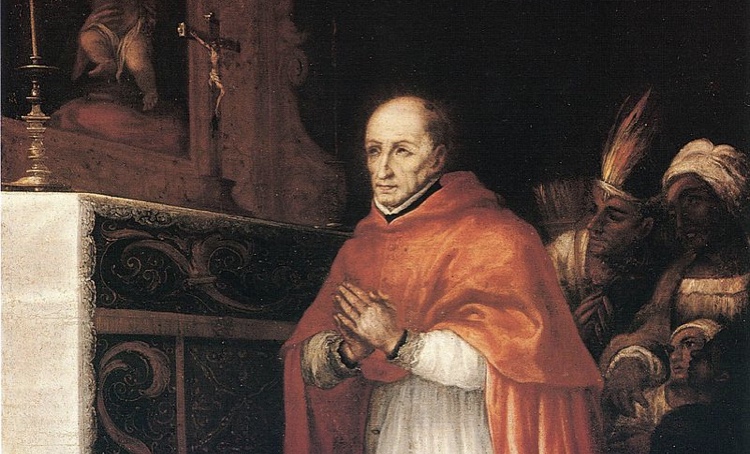
Toribio Alfonso de Mogrovejo was born in Spain in 1538 to a family of high standing. As such, he was able to receive an exceptional education, which proved to scintillate his preexistent intellect and ambition. After working his way up to become a professor of law, he was ordained and eventually decided to carry out his ministry overseas in Peru.
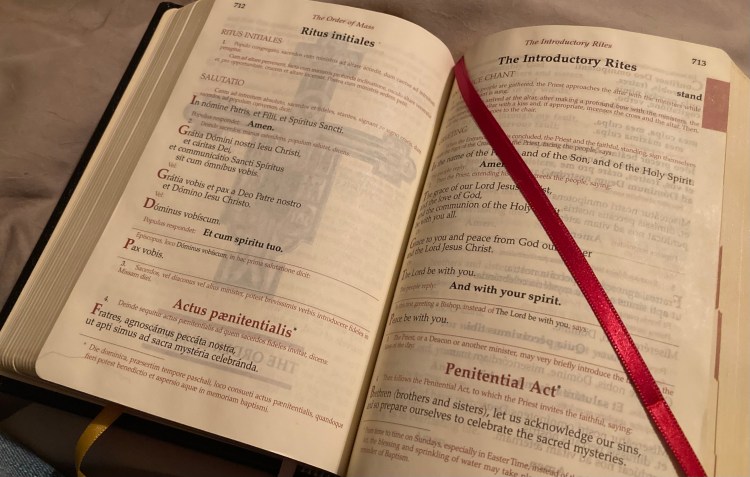
Latin, we hear, is dead—and a fitting statement it is, too, as applied to the tongue that should be the main language of the Church. For the Founder of this Church was also dead, but He “gloriously did rise on the third day,” and is, in fact, still living.