Little is known about Pope Fabian, including when he was born. He became Pope in 236AD, following the death of Pope Anterus. The early Church historian Eusebius relates that Fabian was not one of the original candidates for the office, but a dove descended upon him during the election process and those present decided this was a sign from the Holy Spirit and thus duly elected him.
St. Mungo was born Kentigern, son of Princess Teneu of Lothian. He was the result of his mother being attacked by Owain mab Urien, for which her father, King Lot (also called Lleuddun) had Teneu thrown from a cliff. She miraculously survived and came to an area inhabited by a man called Saint Serf, and was cared for by him.
Gregory of Nazianzus (also called Gregory Nazianzen) was born around 330 AD in Cappadocia, now modern Turkey. Gregory was given a classical education in the cities of Caesarea, Alexandria, and Athens. Among his schoolmates were St. Basil the Great and future Roman emperor Julian the Apostate.
The mysterious legend of St. Catherine of Alexandria begins during the persecutions of Emperor Maximinus. Catherine was of the noble classes, either the daughter of the governor or a princess, and a great scholar on top of it.
St. Martin of Tours was born in 316 in what is now Hungary. He became a Christian at the age of ten and was forced into the Roman army a few years later. However, believing firmly that Christians should not fight, Martin petitioned Emperor Julian the Apostate to be released, saying, “I am Christ’s soldier: I am not allowed to fight.”
Perhaps one of the most significant mothers in the history of the church, besides Mary herself, St. Monica is remembered as the mother of one of the greatest theologians in Western Christianity: Augustine of Hippo.
Monica was a very pious and charitable woman who lived in the North African town of Tagaste.
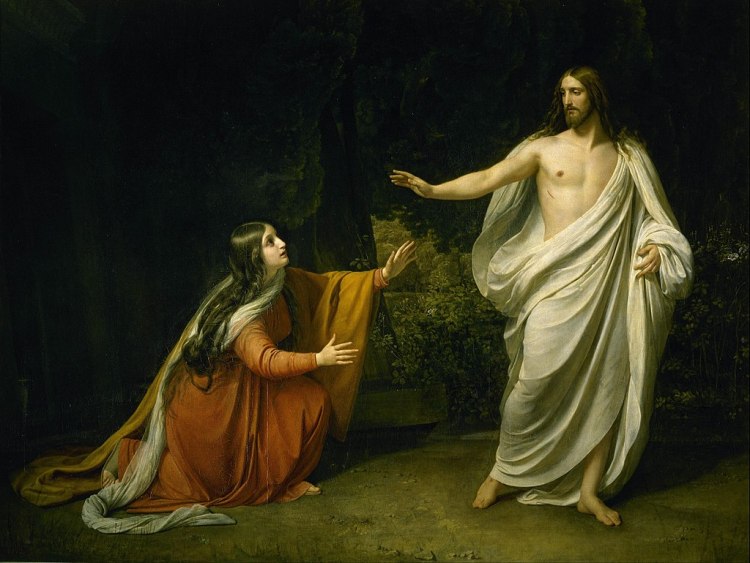
Among all the women in the Bible, none remain so controversial as Mary Magdalene, a mysterious female disciple who was very close to Jesus, almost as close as the Twelve.
Ephrem the Syrian was born in Nisibis, in the province of Mesopotamia (now Nusaybin, Turkey, lying 166 miles from Mosul, Iraq) in approximately 306 AD… Ephrem was baptized as a youth and began right away in building up the Body of Christ in Nisibis as a deacon. It is also highly likely that he was a “son of the Covenant,” an early type of friar or lay brother. As a deacon, he used his gift as a poet and composer to write instructional hymns, teaching the people to confront heresy through song.
Justin Martyr was an early Christian apologist, born about the year 100 AD. He was a student of philosophy and was converted circa 130 AD in part by the witness of martyrs going joyfully to their deaths.
Nothing is known of the youth of the Apostle to the English. What we do know is that he was born sometime in the sixth century and was probably upper-class Roman. He was close friends with Pope Gregory the Great, and his mission to Britain was by the Pope’s specific request…
Twice Cyril found himself driven out of his diocese; fully half of his time as bishop was spent in exile. When he was finally vindicated, and able to return to his seat, he found the whole church in Jerusalem in chaos.
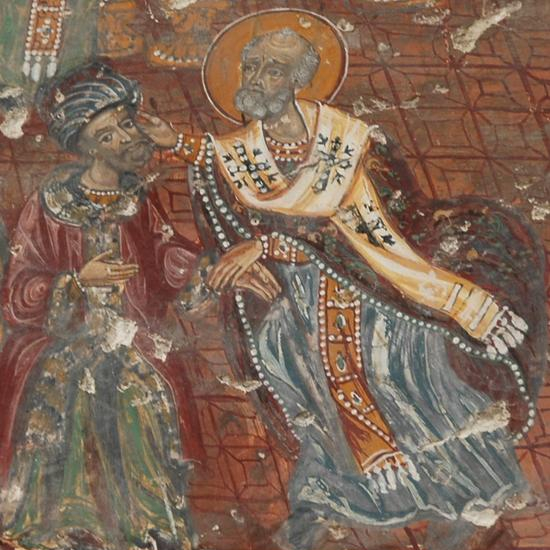
Santa Claus, good old Saint Nick, the bringer of yuletide joy throughout Europe and North America. The historical figure behind Santa is the Christian saint and bishop, Nicholas of Myra. He was born sometime in the 4th century in Patara, modern-day Turkey.






 LogoSophia Magazine