
By Alexander Robertson (PG)
Explanation:
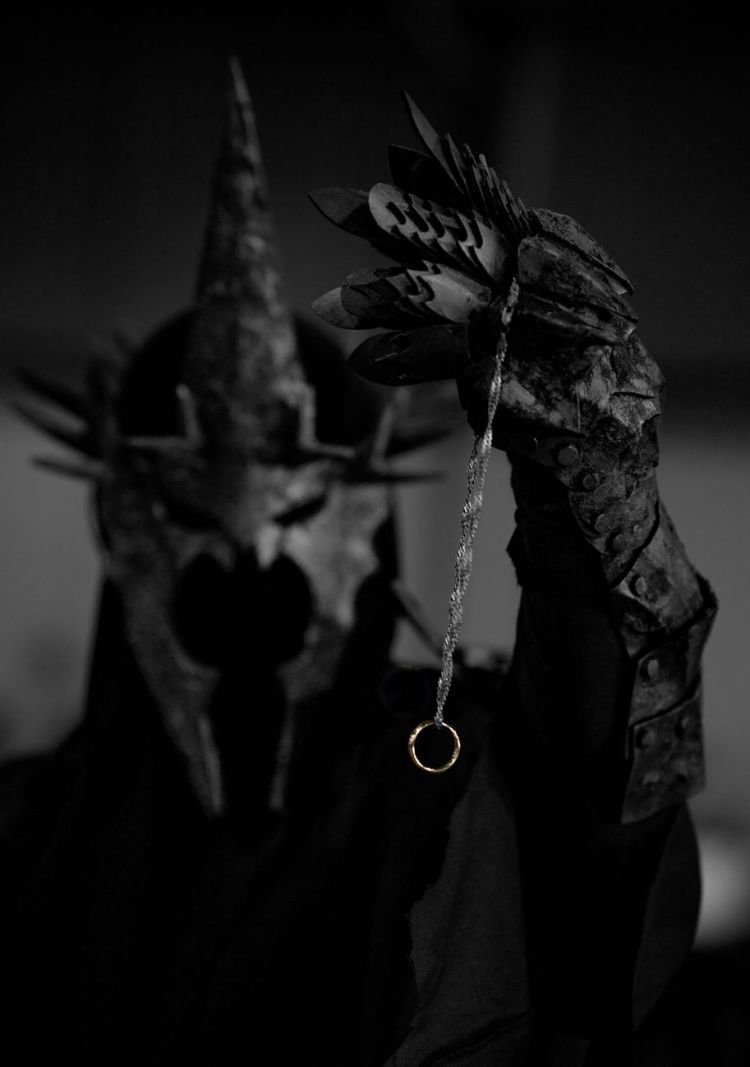
It was a dark day at the end of a dark time. September 1, 2022. What should have been a pleasant day to remember the life and work of the great J.R.R Tolkien was instead the release date for Morgoth’s most evil creation, well, Jeff Bezos’, but that’s pretty much the same thing.
Some friends of mine told me that it wasn’t all that bad, “There are some good parts in it,” “The visual effects are great,” “It is different from the movies but good!” I didn’t believe any of it, but, over the course of several weeks, they finally convinced me that I should at least watch the show before I continued to criticize it. So I did; I poured a glass of brandy, called up my best friend on the phone, and we watched the first episode of the show.
I honestly wanted to be proven wrong; I wanted to see some glimmer of the amazing world of Middle-Earth; I wanted to be entertained by something that was worth my time… I was not. So I wrote this evaluation in about an hour of mildly inebriated anger. I know that this show came out almost a few years ago but I thought that revisiting this billion dollar train wreck would be worth it.
-Alexander Robertson OKC, OK
Okay, I finally watched Ep.1 of RoP
TL:DR:
As a piece of visual fantasy media 5/10
As a work “based on the Lord of the Rings and Appendices by J.R.R. Tolkien” .5/10
The Good:
There were a couple of good shots littered throughout the episode (the trees of Valinor, the undying lands).
Gil-Galad looked elvish.
Elrond looked elfish.
At the very beginning when Galadriel and her brother were walking away from the tree they looked sufficiently elvish.
The character designs and costumes for the humans (the main woman being excluded from this statement) looked good, not great but acceptable.
The elvish swords all looked like they were created by the same people (idiots and machines, but idiots and machines that were working off of the same design principles).
When you can’t see the bottom half of her face, Morfydd Clark (Galadriel) looks like Cate Blanchett (Better Galadriel).
For the most part the elvish architecture was pretty.
The Harfoots’ town was kinda cool.
The Bad:
The elves have absolutely nothing unifying the character design except when they are literally wearing the exact same thing as everyone else.
The swords look like absolute trash; they look generic as heck and feel like someone typed 30 instead of 3 onto their 3D printer then didn’t have $470m to fix their mistake. Galadriel and Elrond’s blades are unique but really poorly designed – the very rounded handles would be quite unwieldy.
The armor of the woodland ranging elves is one of the most impractical designs I have ever seen. They fill me with rage.
The CGI is downright bad at times, other times it is acceptable but sometimes it looks like Uncharted 4.
It was very noticeable when they were shooting on location in NZ and when they were on a soundstage.
The main human girl’s costume was absolute trash: it is wayyy too low cut to be considered acceptable in any pseudo-medieval society especially one that is being characterized as repressive and backwards. The dragon(?) brooches she has on her dress straps are the crème de la crap of the entire outfit. They also fill me with rage.
The one elf catapulting Galadriel off his sword is the single most stupid thing I have ever seen put to film; the only rival that I can immediately think of is the ending of the comic book of Revolution.
The Ugly:
I am about to do something unthinkable: I am going to compare the show to the source material it was based on and other adaptations of the same world. Because I know that there are some who make this out to be a novel concept, I will defend the validity of this argument against morons.
The title of this show is “The Lord of The Rings: The Rings of Power” and in the end credits of Ep. 1 it says “BASED ON THE ‘LORD OF THE RINGS’ AND APPENDICES BY J.R.R. TOLKIEN”. If the show runners did not want comparisons to be drawn to other LOTR renditions, they should have written their own world. The marketing is Tolkien and LOTR. The cast speaks of Tolkien. The social media team brought in actors from the other movies. It is very obvious that AMZN wants it to be associated with not only Tolkien but the Peter Jackson films as well.
The elves, oh my poor elves, I don’t know who these pointy eared, short haired, in some cases portly humanoids are but they are certainly not the elves that Tolkien wrote of or that anyone what has been reading the books for the past 85 years would recognize. The Eldar are supposed to be the most beautiful, regal, and majestic creatures in Arda, the firstborn of Ilúvatar. They are described by Tolkien as “fair” and “pale of skin” and every time their hair is described, it is described as long or with other words that carry the same connotation, like “flowing”. All of these descriptions were captured nearly perfectly in the PJ movies, and it cost them an arm and a leg to do it because they could basically only use supermodels, but they did it.
Outside of their looks, the show runners obviously have no clue how elves work; from the very first scene they are getting it wrong. Elves are not tainted by original sin (that’s why they don’t die or, to quote the Professor, they have “limitless serial longevity”), so the bullying of Galadriel, BEFORE THE TREES OF VALINOR FELL, would not have happened; I do not care what moronic explanation anyone comes up with. The first scene alone is a larger betrayal of Tolkien than I would have thought possible – the only thing even close to that in the PJ movies was the removal of Bombadil and the Scouring of the Shire, the removal of which served to tell the narrative of the LOTR, even if it did pull out a large amount of the point of the story.
Hobbits did not exist in the second age, and the Harfoots are one of the three sub-types of hobbits. Putting them in the second age completely destroys one of the most interesting concepts of Middle-Earth which is that Ilúvatar created the Hobbits in the Third Age because the third age needed Hobbits.
The world of Arda has many problems in the books: Númenor’s rebellion, the animosity between the Mirkwood elves and the Erebor dwarves (which was highly played up in the movies), and the fickleness of men, just to name a few, but racism between Eldar and Atani was not a thing, ever. There is not any reason to tell a story of racism in Middle-Earth; it simply doesn’t fit. Once again, if the producers didn’t want to tell Tolkien’s story, they should have made their own world.
Lastly, the worst offense this episode committed, the most un-Tolkienien sentence ever spoken: the phrase “sometimes we cannot know until we have touched the darkness” in response to the question “how do I know which light to follow?” One of the things that strained the relationship between Lewis and Tolkien was Lewis’ publishing of The Screwtape Letters. Tolkien thought that to draw closer to the demonic darkness, even to fight against it, was too dangerous to attempt. The primary point of the Lord of the Rings is the concept of darkness being a corrupting force, with the Ring luring men in with the promise of power then corrupting them. In Tolkien’s world the only thing to do with darkness is to destroy it, NEVER, under any circumstances would Tolkien have used the words, “Sometimes we cannot know until we have touched the darkness.” He would have fought against the concept with his last breath. The man was against darkness in the form of industrialization (which had very obvious benefits), and saw even that as too dark to trifle with. May the Kantian moron who wrote that line have his soul rent from his body and be condemned forever to wander Arda as a Faë.
Conclusion:
I avoided in-depth reviews for this show and went into it not knowing much beyond what the trailers showed and what people said about them. This show disappointed even my low expectations.

