

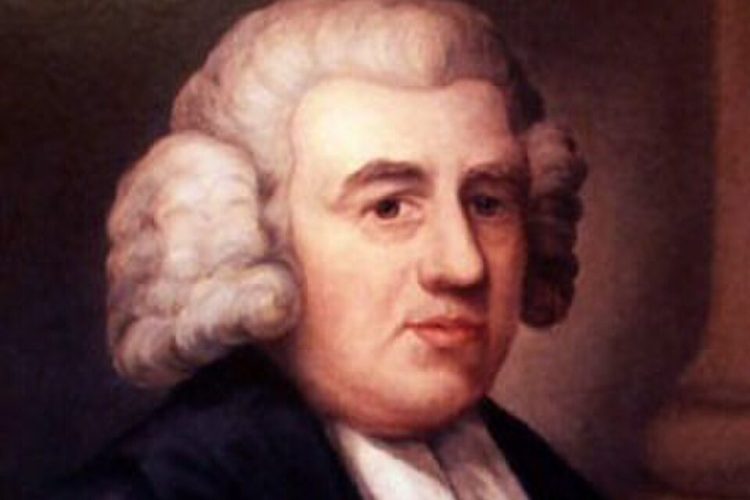
By Sarah Levesque Losardo
John Newton was born July 24, 1725, in London, England. After his mother died when he was seven years old, John began to join his father, a sea captain, on his voyages. At the age of sixteen, John was pressed into service by the Royal Navy, and later became a sailor on a slave trader ship, eventually working his way up to captain. On March 10, 1748, John’s childhood faith, taught to him by his mother, was reawakened in him by a terrible storm which put his ship in grave danger, but he continued in the slave trade until 1754, when his health deteriorated. Ten years later, he published his autobiography and was ordained a clergyman in the Church of England, settling in Olney, Buckinhamshire.
In 1779, Newton and his friend William Cowper compiled songs they had written into a hymn book they published under the name Olney Hymns. The most famous of these today is likely Newton’s “Amazing Grace”. During this time, he recognized the evils of slavery and repented of his earlier involvement in the slave trade. He mentored William Wilburforce, a prominent abolitionist, and in 1787 the two founded the Society for Effecting the Abolition of the Slave Trade, also known as the Anti-Slavery Society. 1788 saw Newton’s autobiographical pamphlet Thoughts Upon the African Slave Trade published and read widely. A copy was sent to every member of Parliament after the second printing.
John Newton died on December 21, 1807, in London. He had outlived the legal British slave trade he preached and argued against by nine months.
May we, like John Newton, be humble enough to repent of our past failings and strive to rectify the wrong we have done.

