
By Ian Wilson
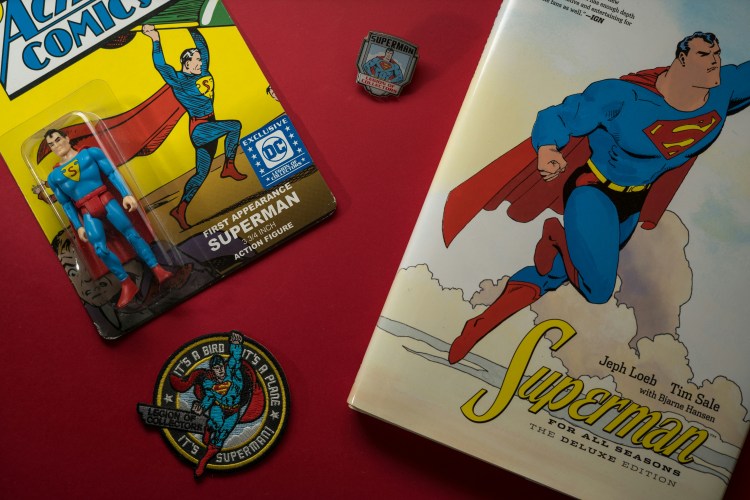
Superman
An icon of the superhero genre, and indeed, America itself. The platonic ideal of what it means to be a superhero. Love him or hate him, he has made his mark on our consciousness. And yes, he has plenty of detractors. I’ve run into a few of them.
I am immediately suspicious of anyone who strongly dislikes Superman; this is partly due to the fact that I was raised on Superman the Animated Series and the Justice League cartoon. Those shows held me spellbound for hours as a kid. I still love the guy, even though he’s been through a lot of incarnations and changes. I guess what I’m saying is that I love Superman as a concept; as he was originally conceived.
People complain about Superman because he is “unrealistic”, or “too perfect”, “too goody-two-shoes” or too overpowered. I will admit that being too overpowered is a legitimate criticism; to be too powerful just ruins the story; there’s no more challenge. No risk. But a lot of that depends entirely on the writer. Some writers make Superman so strong that he could change the orbit of the Earth, while others tend to keep him a bit less powerful. However, I will not even entertain the idea that he is “too good”.
The idea that powerful men must always be corrupt is something of a modern one. It isn’t that power corrupts as the saying goes, but that corrupt seek power, and usually get it. Power reveals what we’re really made of, and if one is lacking in moral fortitude, that person will indeed become corrupt when placed in a position of power. But the idea that all powerful men are evil is simply untrue.
Our trouble as a culture is that we have lost the concept of nobility. Once upon a time, being a member of the most powerful class of society meant that once had certain obligations and duties to those less powerful. With nobility of rank came the expectation of nobility of character. Being considered a gentleman meant that one was benevolent, or gentle, to all, especially those less fortunate. Did they always live up to that? History teaches us that many, if not most, did not. However, there was the standard there; the old chivalric virtues of piety, honor, valor, courtesy, chastity, and loyalty.
These qualities all fall under the virtue of meekness – another concept we have gravely misunderstood. Meekness is not a weakness; meekness is power under control. Meekness is discipline. Meek men are strong, but they act with humility. I have stated in the past that the most polite and gentle men I have ever known were Marine Corps veterans, boxers, and karate black belts. These men were meek, because they kept their power in check.
Superman, at his best, is symbolic of the virtue of meekness. He is good not because he fears punishment, but because he loves goodness. He treats all with gentleness. He is not perfect, and he makes mistakes, but he tries his very best to do the right thing. This is why he is a great roll model for young men. Too many young men are following morally bankrupt men like Andrew Tate, thinking that such bluster is somehow “manly”. It is not. The great Stoic philosopher Seneca the Younger once said that “all cruelty stems from weakness”. Superman is strong, because Superman is good. And we should all aspire to be good.

