Faithful Friday: Martin Chemnitz
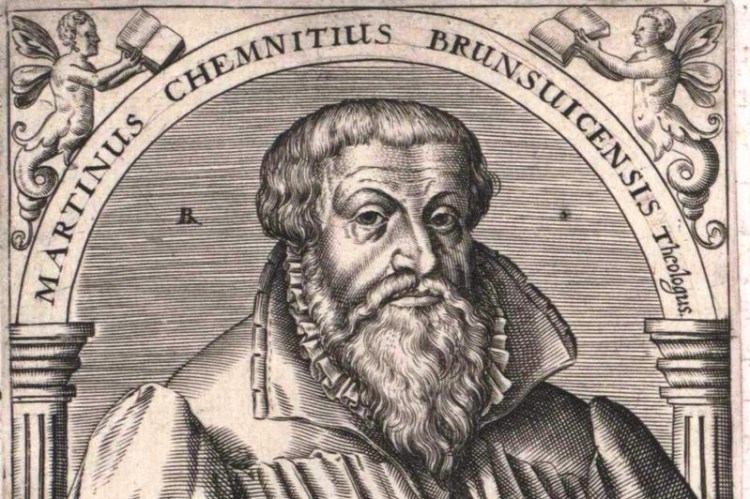
Martin Chemnitz (1522-1586) was a second wave Lutheran, often known as “the Second Martin” as his contributions to the Lutheran faith were second only to those of Martin Luther.
Read More
Martin Chemnitz (1522-1586) was a second wave Lutheran, often known as “the Second Martin” as his contributions to the Lutheran faith were second only to those of Martin Luther.
Read More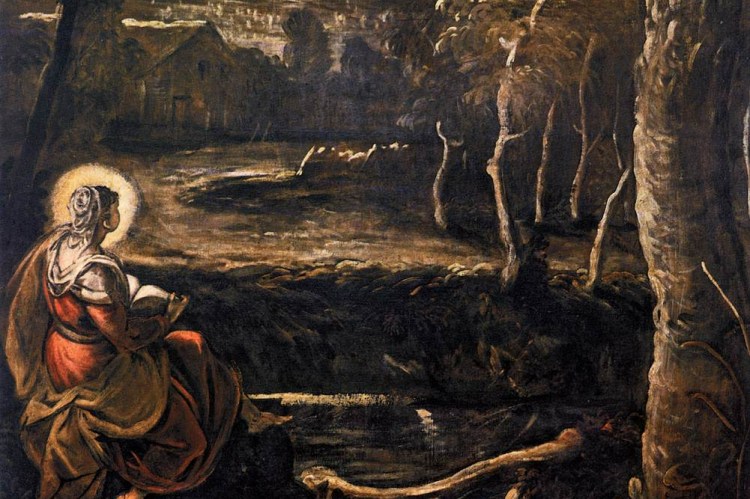
The exact details of the life of Mary of Egypt are scarce; her story is told to us third hand by an order of monks living in the Palestinian desert. They tell us that she was a devout holy woman who had once lived a life of sin…
Read More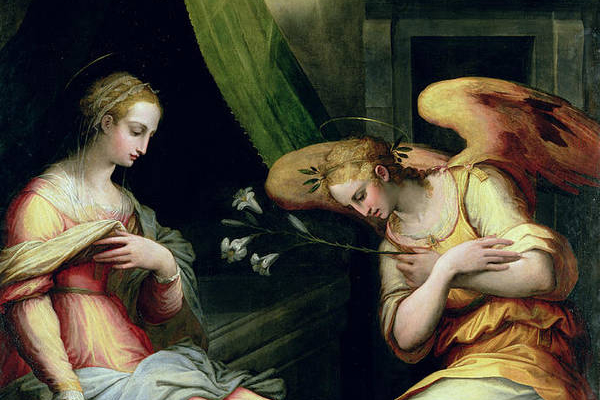
Today (March 25th) is exactly nine months before Christmas Day, so today we celebrate the Annunciation. Since we’ve already covered the Blessed Virgin Mary this year, today we’re going to look at the other person in that room – the angel Gabriel.
Read More
Twice Cyril found himself driven out of his diocese; fully half of his time as bishop was spent in exile. When he was finally vindicated, and able to return to his seat, he found the whole church in Jerusalem in chaos.
Read More
Perpetua and Felicity were early Christian martyrs who died in Carthage in 203AD. The primary narrative of their experiences was written by Perpetua herself in the form of a journal.
Read More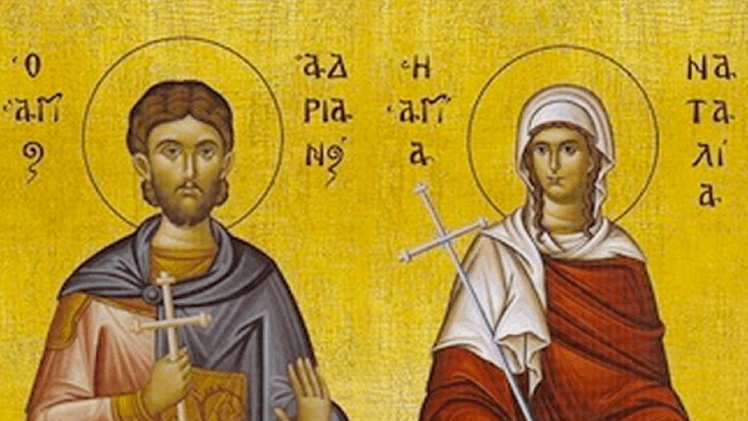
St. Adrian lived during the time of Emperor Maximian in the fourth century. Before his conversion to Christianity, Adrian had been a member of the Praetorian Guard, and was witness to the sufferings of the early Christians. So impressed was he by their courage and refusal to bend in the face of great suffering, Adrian asked these soon to be martyrs what rewards their God offered them for their sacrifice.
Read More
St. Polycarp was one of the earliest church leaders after the death of the original twelve apostles, having been taught by St. John himself. He was the bishop of Smyrna in Asia Minor; one of the churches started by the Apostle Paul.
Read More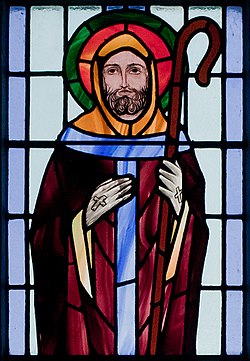
Colman of Lindisfarne was born in Ireland around 605AD. He first joined the monastery of Iona, then was moved to the monastery of Lindisfarne soon after its founding in 635. Eventually he became the abbot there, a position that also made him the bishop of Northumbria.
Read More
St. Blaise lived during the reigns of emperors Diocletian and Linius. Some early sources say that he was a physician, though we cannot be certain. He was unanimously elected bishop of Sabaste, due to his reputation as a devout man of faith.
Read More
Pastor, theologian and Nazi resistor, Dietrich Bonhoeffer was born in Germany on February 4, 1906 to a professor of psychiatry and neurology and his wife, the daughter of a preacher. Bonhoeffer grew up to become a professor of theology, though his family wanted him to pursue a musical career.
Read More
St. Thomas became a prolific theological writer, famously dictating his thoughts for different works to multiple secretaries simultaneously… His seminal work is the Summa Theologica (or Summa Theologiae), a massive multi-volume explanation and defense of all of the beliefs and teachings of the Catholic Church.
Read More
Saint Agnes was a Roman martyr from the times of the early persecutions of the Church whose exact time period is unknown, though she may have died in 304. While her exact story is also unclear, tradition holds that Agnes professed herself to be married to Jesus and would accept no other husband.
Read More
Little indeed is known for sure about the magi who visited the child Jesus, bringing Him gold, frankincense and myrrh. Matthew is the only Gospel writer to mention them, detailing their visit in the second chapter of his gospel. Matthew does not call them kings, but ‘magi’ or ‘wise men’.
Read More
During the octave of the birth of Jesus, I think it is fitting that we look at His mother, particularly today, on the eve of one of her feasts in the Catholic Church. Today, let’s simply take a look at the Gospels.
Read More
#FaithfulFriday
While little is known of Joseph’s life, we do know that he was a man of high moral character. He would have to be in order to be the foster father of our Lord, Jesus. The Gospels tell us…
St. Olympias was born to a wealthy Roman family with many ties to nobility in the 360s AD. At a young age, she married Nebridius, Prefect of Constantinople. One of the invitees was St. Gregory of Nazianzus, though he was unable to attend.
Read More
Perhaps the most famous theologian of the 20th century, Karl Barth was born in Basel, Switzerland in 1886, the son of a professor of Early Church History at Bern. Barth studied at several universities during his theological training, and came under the influence of 19th century liberal theology. After graduating, he became a minister in Geneva from 1909 to 1911, before moving to Safenwil, Switzerland.
Read More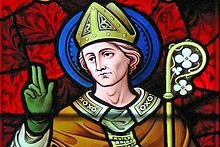
St. Birinus, sometimes called Birin or Berin was consecrated as a bishop and sent by Pope Honorius I to be a missionary to the people of Britain. He was successful in converting the pagan king of the West Saxons…
Read More
Without a doubt, one of the finest hymn writers in Protestant Christianity, Isaac Watts was born in 1674, while his father was imprisoned for his nonconformist beliefs. Though often in ill health and clinically depressed, Isaac Watts inherited his father’s steadfast character; a trait which kept him strong through fierce criticism, church splits and other hardships.
Read More
St. Mechtilde of Hackeborn was born in 1240 or 1241 to one of the most important families of Thuringia. She was baptized immediately after her birth, as it was feared that she would die soon after. The priest who baptized her was unconcerned, saying, “This child most certainly will not die, but she will become a saintly religious in whom God will work many wonders, and she will end her days in a good old age.”
Read More
